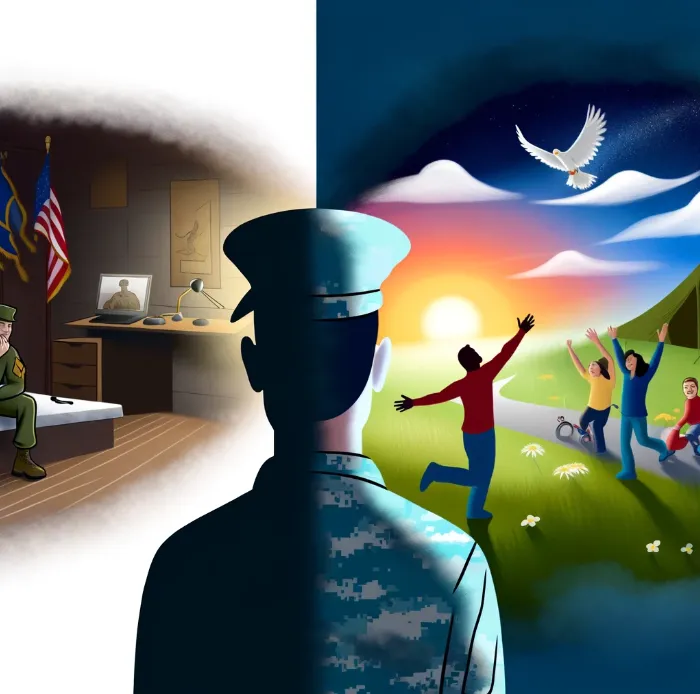
Fighting Depression in the Military
"The valor of service bears the weight of solitude and resilience, where the battlefields are not only external but also within, challenging the heart and spirit in the quest for balance and belonging."
The life of our servicemen and women is incredibly demanding. It's a journey that tests both physical strength and mental resilience. The rigorous training schedules, combined with extended periods away on duty, inevitably strain personal and family connections. It's not uncommon for many in uniform to battle depression at some point.

Fighting Depression in the Military
Navigating the Tough Terrain
The strain of military life can erode the joy and personal fulfillment that balance work and leisure. It's the classic scenario where relentless dedication can lead to feeling disconnected and unfulfilled, encapsulating the saying, “All work and no play makes Jack a dull boy”—leaving many feeling depleted and yearning for more.
The Ripple Effects of Military Life
In the realm of personal fulfillment, relationships play a pivotal role. Yet, the military lifestyle—with its relentless travel, relocations, and deployments—poses significant challenges to nurturing deep, meaningful connections. Friendships may be born in the heat of action but maintaining them often requires effort across distances. Marital strife, including divorce and infidelity, frequently shadows our armed forces, underscoring a quest for self-worth and belonging that sometimes leads down a somber path.
Alcohol often becomes a social glue within military circles, yet it can also mask deeper issues of dissatisfaction and isolation. A stark testament to the lifestyle's impact is the veteran suicide rate, which stands at about 30 per 100,000 annually—significantly higher than the civilian rate of 14 per 100,000.
Strategies to Lift Spirits
Darren Hardy's The Compound Effect offers invaluable insights into how small, consistent actions can lead to significant life changes. Echoing Albert Einstein's reverence for compound interest as the world's eighth wonder, we can apply this principle to our daily routines.
The disciplined routines honed in basic training—like making our beds, adhering to physical training schedules, and eating at regular times—can form a foundation for well-being. These habits, cultivated over time, ease the difficulty of early rises, improve physical fitness, and encourage healthier eating habits.
Setting Goals for Growth
Drawing on the discipline ingrained during service, let's tackle life's challenges with manageable goals:
Dedicate Quality Time: Reserve uninterrupted time for friends and family, focusing solely on these relationships without distractions from work or life's stresses.
Prioritize Personal Time: Engage in activities outside your home that rejuvenate you, be it hiking, camping, or traveling. It’s crucial to find joy in experiences that refresh your spirit.
Embrace New Challenges: Set attainable goals using the S.M.A.R.T. criteria—Specific, Measurable, Achievable, Realistic, and Time-sensitive. Start small and build from there.
Nurture and Repeat: Cultivate deeper connections through consistent social interactions and the satisfaction of achieving set goals, enhancing your sense of worth and accomplishment.
A Journey Together
This path isn't a cure-all, but it's one that has brought light to my journey and to others I've had the honor to serve with. It’s a continuous effort, often challenging to navigate alone. Remember, support is always available. Whether it's reaching out to a hotline at 1-800-273-8255 (press 1) for immediate help or connecting with resources like the Green Beret Foundation, which holds a special place in my heart, help is out there, you can learn more about what the foundation offers here.
A Reminder
Our veterans are more than their battles with depression and PTSD. This reflection isn’t the full scope of the veteran experience but a beacon for those feeling adrift, showing that revitalization is within reach, and you’re not alone in this fight.